vendredi 26 mars 2010

Class 8: Correction Echenoz & Text by Giradoux


Hello class, sorry about the delay this week in posting your correction and new text.... time flies so quickly sometimes, but this is no excuse.

Just to let you know also that the week after next is Easter weekend, including Easter Monday. For those in Group 1, this is "problematic", since there will be no class. There will also be no "make-up" class (due to a lack of weeks in the semester). So, I invite you to come to the class on Tuesday (also at 14h), if you can or want to. You can suggest other solutions if you would like in class this week.

So, here are the texts.

CORRECTION Jean Echenoz


And now that he had a moment, the bartender was speaking to the young man, pointing out the strong (big) man with his gaze (with his eyes/a look). He seemed to be talking softly, yet despite the music, the young man seemed to understand. He slid from his barstool, walked calmly up the line of drinkers and came up close, very close, to the strong man and said something that Georges Chave couldn’t hear.

The strong man shuttered (was startled, jumped), and trying to back up, banged into the bar (bumped into). The young man moved his lips again and, suddenly, hidden somewhere between the dark crowd and the noise, Georges Chave saw the flash of a razor off whose blade reflected a fleeting, dim yellow glow. Responding to God knows what, there was a ripple through the crowd and Georges Chave banged into the strong man who fell (tripped) backwards and who the young man wanted to hold back by stooping down within reach of Georges Chave, who in turn threw out his leg to crush his foot into the nose of the young man who began to scream something inaudible, bringing his hands to his face. The razor fell somewhere among the dancing shoes (feet). The strong man looked quickly at the big man and then ran away from the bar towards the stairs cutting his way like a wild boar through the women dancing. Georges Chave ran after him and met up with him in the hallway.


TEXT TO TRANSLATE FOR NEXT TIME:

This is admittedly a long text. I am however including this whole section because it gives you some indication of context. Also, the ACTION happens in the USA so you should translate the name of the geological formation mentioned in the first line as well as the names of the organisations and companies mentioned later into English

Translate as much as you can and we will see how far we get. If we need to finish it up over two weeks, we can.


Jean Giraudoux, « La surenchère », dans Les contes d’un matin 1952

Charlie parcourut les îles, grimpa sur le rocher des Chèvres. Soudain, il prêta l’oreille. On marchait derrière lui, depuis un bon moment, avec précaution. Les pas se rapprochaient aux tournants dangereux, s’attardaient au contraire quand le roc devenait plan, pour redevenir, dès qu’on côtoyait une cascade, plus proches et plus menaçants. Les gens qui vont se suicider évitent peut-être encore les araignées ou les chenilles, mais ne redoutent pas les agressions. Charlie, heureux de l’aventure, décida d’attirer l’assassin ou le voleur dans un petit îlot où nul ne les dérangerait. Il n’y avait qu’à enjamber un ruisselet plus bruyant que dangereux, et avant de franchir le dernier Rubicon, ce n’était point là une affaire. Il sauta. On sauta derrière lui, on pataugea même un peu. Il gravit un rocher qui surplombait un gouffre au-dessus duquel mille arcs-en-ciel se croisaient, se fondaient et se dédoublaient comme des rosaces de cinématographe. On grimpa derrière lui, non sans glissades répétées. Il se retourna alors brusquement.

La face tatouée d’un Iroquois en costume de guerre l’eût moins troublé que ce qu’il vit. Au lieu du bandit classique auquel il s’attendait, une jeune fille blonde et jolie comme on en voit sur les affiches, lui souriait.

-- Monsieur Eggins ? demanda-t-elle seulement. Charlie s’inclina.

-- Monsieur Eggins, je suis membre actif de l’Association des Partisans du Seigneur. Vous connaissez ses églises de Boston. Vous avez visité, comme tous, sa chambre présidentielle, dont tous les objets, même la baignoire, sont d’or massif. Je viens en son nom vous rappeler que le suicide est un péché mortel et vous conjurer de vivre pour le salut de votre âme.

-- Tous mes regrets, Miss, c’est impossible.

-- Vous êtes bien résolu à mourir ?

-- Je le suis.

--Vous jurez que vous ne changerez point d’avis ?

-- Je le jure.

-- Alors, Monsieur Eggins, permettez-moi d’exposer la seconde partie de ma mission. Je suis également mandataire de la Maison Forbett, d’Indianapolis. Son cirage et ses vernis ne vous sont pas inconnus. La Maison Forbett vous offre vingt mille dollars, payables à celui de vos parents que vous désignerez si, dimanche, vous vous jetez du pont suspendu avec une banderole qu’elle vous fournira et qui porte sa marque de fabrique. Je passerai ce soir, à huit heures, à votre hôtel chercher la réponse.


mercredi 17 mars 2010

Class 7: Correction Berque & New Text by Echenoz


This week we got back to work but started branching out by studying an academic text by a contemporary author and researcher.

In fact, if you want to delve more into his texts, his theories and his world you can actually audit his seminar at the Ecole des Hautes Etudes en Sciences Sociales: http://crj.ehess.fr/document.php?id=581


For this text, it was imperative to analyse the overall meaning to find the juxtaposition between the living, WE, and the dead, THEM. From there, you needed to adapt the pronouns found in the text to correspond to the category you were talking about.


PART ONE: CORRECTION:


Opening Corpses


VIII. Yet no matter what they tell us, in the end corpses only say what we want to make them say. “We”, in other words, the living, with our monopoly on speech. We take advantage of this to be the only ones to talk about death, even if it’s the one thing in all the world we know the least about. Certainly, we see death with others, but no matter how much we autopsy ourselves, we’ll never see ourselves dead. There’s no hermeneutics of death: we’ll never know what it wants to say, other than transposed in terms of life. As someone who’s alive and thus capable of talking about death, I know that we, the living, are unable to put ourselves in the place of the dead. Even if we chant Requiem aeternam dona eis (“Grant them eternal rest” in Latin, a dead language but not the language of the dead), it’s mainly so the souls of the dead will leave us alone, we who are alive. Because souls that aren’t at rest come back; and we don’t really want that. What we want is for those we love not to die. But once they’re corpses, they’ve gone to another world, and we don’t really know what kind of ideas they might get over there. No doubt not the same ones they had while they were alive; because since they’ve been dead, they’ve seen worse (other things). They’ve seen other dead people who could very well have given them dead-people ideas.


HOMEWORK

For next week (22/23 March 2010) we will deal with ACTION. Again, it is important to know who did what, where and when and to whom. Here is the text:

Jean Echenoz, Cherokee 1983


Et maintenant qu’il avait un instant, le serveur parlait encore au jeune homme en désignant l’homme fort du regard. Il semblait parler à voix basse mais, malgré la musique, le jeune homme paraissait comprendre : il glissa de son tabouret, remonta calmement la ligne des buveurs pour s’approcher de l’homme fort, très près, et lui dire quelque chose que Georges Chave ne put entendre. L’homme fort sursauta, voulut reculer, se heurta au comptoir. Le jeune homme remua encore les lèvres et puis, subitement, caché entre eux parmi la foule obscure et le bruit, Georges Chave vit luire un rasoir dont la lame réfractait un faisceau fugitif de lueur jaune. Sous l’action d’on ne sait quoi, il y eut alors un mouvement de foule et Georges Chave heurta brusquement l’homme fort qui trébucha et que le jeune homme voulut retenir en se baissant à portée de Georges Chave, lequel alors balança sèchement sa jambe pour écraser son pied sur le nez du jeune homme qui se mit à crier quelque chose d’inaudible en portant ses deux mains vers son visage, le rasoir allant se perdre sous les semelles des danseurs. L’homme fort regarda brièvement l’homme grand, puis s’éloigna du bar en courant vers l’escalier, se frayant un brutal passage de sanglier à travers les femmes qui dansaient. Georges Chave courut après lui, le rejoignit dans le hall.

mardi 9 mars 2010

Class 6: Correction DST and new text by Berque


Hello class, two weeks ago there was no blog entry because of the DST. I was pleased at the results.

Here are the corrections:

(I had promised you two excerpts from your classmates, but that might take up too much room. Instead, I have incorporated some of their GREAT ideas into the correction, which is slightly different from what we did in class.)

Text A: Muriel Barbery, Une Gourmandise (Gallimard, 2000)

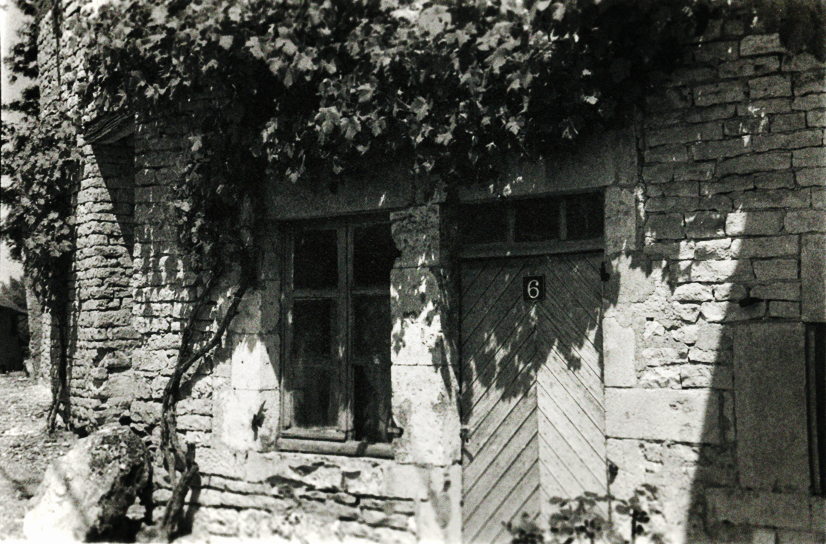
My Aunt Marthe’s house was an old dilapidated house engulfed in ivy. Due to a boarded up window, it had a slightly blind appearance which was in perfect harmony with the surroundings and its inhabitant. Aunt Marthe, who was the eldest of my mother’s sisters and the only one not to have inherited a nickname, was a surly, ugly and smelly old maid who lived in the midst of her chicken coop and the rabbit hutches in an incredible stench. Inside, it went without saying, there was no water, no electricity, no telephone or television.


Text B: Julien Green, Moira (1950)

“Mister Day,” she said. “Do you know what is in this letter?”

“Yes,” he replied. “I wrote it down myself while my father was dictating it to me.”

His voice was muted, both husky and tender at the same time.

“My father is blind,” he explained.

Mrs. Dare raised her eyebrows. Neither old, nor young, she was thin and stood erect in her grey dress with white flowers. Her cheeks were flat and rubbed with blush and her black hair was pulled back (in a bun). Her mouth was too broad and her nose too pointy for her to be considered pretty, but the young man concluded that she, at any rate, must find herself so to make herself up in that way.


Homework to translate for next week ( 15/16 March)

Augustin Berque: L'ouverture de cadavres, 2007

VIII. Quoi qu’ils racontent, pourtant, les cadavres ne disent en fin de compte que ce qu’on veut bien leur faire dire. « On », c’est-à-dire les vivants, qui monopolisent la parole. Ils en profitent pour être les seuls à parler de la mort, bien que ce soit la chose au monde qu’ils connaissent le moins. La mort, certes, on la voit chez les autres, mais on aura beau s’autopsier, soi-même on ne se verra jamais mort. Il n’y pas d’herméneutique de la mort : jamais on ne saura ce qu’elle veut dire, sinon transposée dans les termes de la vie. Moi qui suis vivant, et puis donc parler de la mort, je sais que nous autres vivants sommes incapables de nous mettre à la place des morts. Même si l’on chante Requiem aeternam dona eis (« Donne-leur le repos éternel » en latin, langue morte mais non pas langue des morts), c’est d’abord pour que les âmes des morts nous laissent tranquilles, nous autres qui sommes en vie. Parce que les âmes qui ne sont pas en repos, elles reviennent ; et ça, on n’en veut pas. Ce qu’on voudrait, c’est que ceux que nous aimons ne meurent pas. Mais une fois cadavres, eux sont partis dans un autre monde, et nous ne savons pas trop ce qu’ils peuvent se mettre dans la tête, là-bas. Sans doute pas la même chose que ce qu’ils y avaient de leur vivant ; car depuis leur mort, ils en ont vu d’autres. Ils ont vu d’autres morts, qui ne peuvent leur avoir donné que des idées de morts.